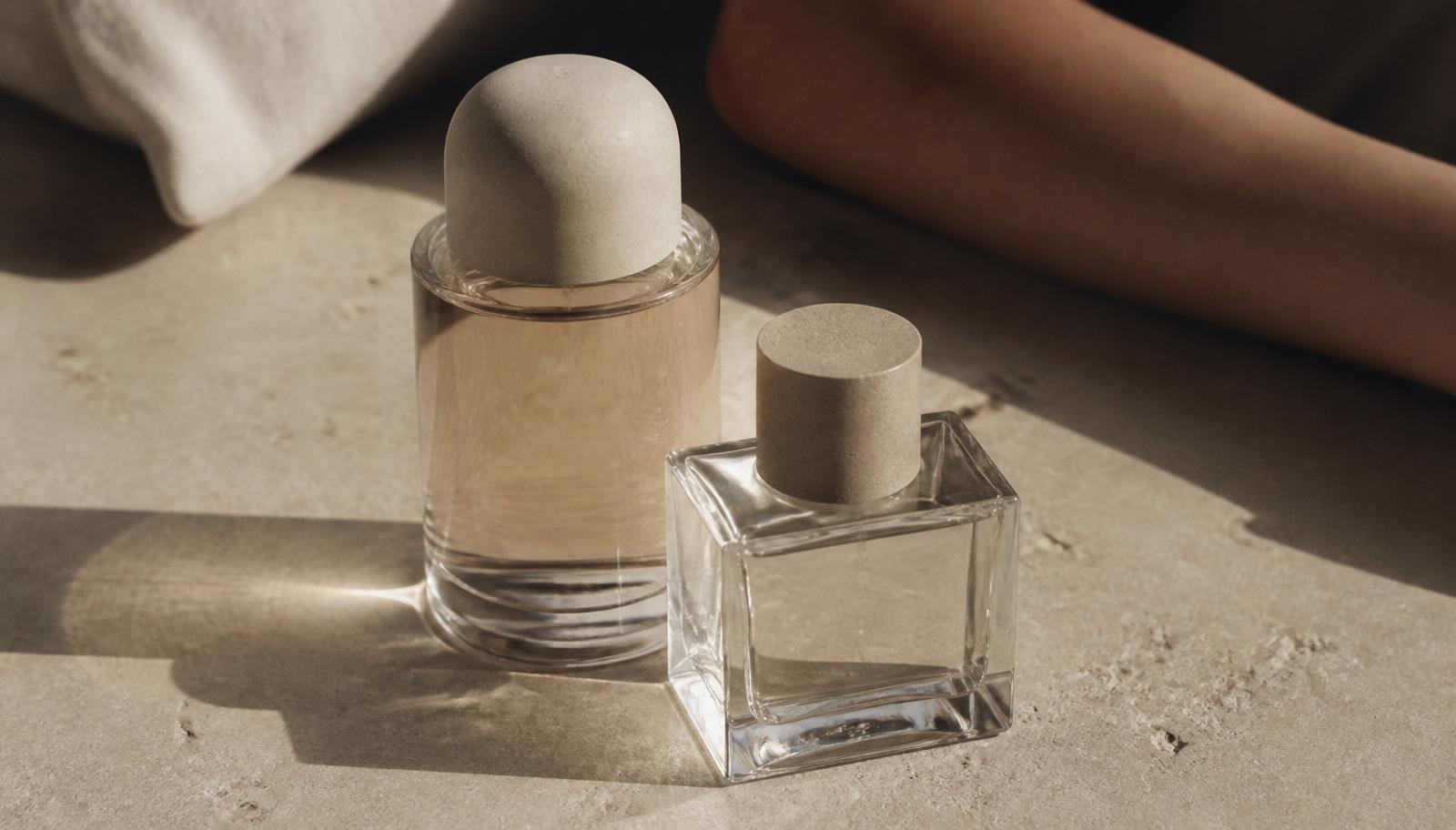
Finding a signature scent isn't about discovering the best perfume. It's about finding the one that feels unmistakably like you — the bottle you reach for without thinking, the one people start associating with your name. That fragrance almost never announces itself on the first spray in a department store. It's found the slow way: by learning your own taste, testing properly, and giving a scent enough time to prove itself.
What follows is the process collectors actually use, stripped of mystique. Work through it in order and you'll end up with something more valuable than a bottle: a vocabulary for your own preferences.
01 — Start With Your Fragrance Personality
Before you smell anything, get honest about what you're drawn to. Fragrance taste is built out of mood, memory, aesthetics, and lifestyle far more than it's built out of chemistry. The person who loves cold, mineral rooms rarely falls for a warm praline. That's not a flaw — it's data.
Sit with these questions and answer them in a sentence each:
- Do you gravitate toward clean and fresh scents, or darker and more sensual ones?
- Do you prefer minimal and understated, or bold and mysterious?
- Which do you actually like: sweetness, woods, florals, spices, musks, incense, citrus, or green notes?
- What do you want people to associate with you when they smell your fragrance?
That last question matters most. A signature scent is a form of self-description you leave in a room after you've walked out of it.
02 — Learn the Major Fragrance Families
Families are a map, not a rulebook. Knowing them lets you say "I like dry woods, not sweet woods" instead of "I liked bottle number three," which is the difference between shopping and searching.
Floral
Petals, from dewy and transparent to heady and almost animalic at night.
Rose, jasmine, tuberose, iris, orange blossom, peony
Woody
Dry, grounded, a little architectural — the scent equivalent of good tailoring.
Cedar, sandalwood, vetiver, oud, cypress
Amber / Oriental
Warm, resinous, golden. Skin-close and slow-burning.
Labdanum, benzoin, vanilla, tonka, spices, balsams
Fresh
Air and water — citrus zest, cut herbs, laundered cotton, sea spray.
Bergamot, lemon, neroli, mint, calone, clean musk
Gourmand
Edible without being a dessert cart: caramelised, milky, boozy, nutty.
Vanilla, praline, coffee, cacao, rum, salted caramel
Green
Crushed stems, tomato leaf, wet garden after rain. Sharp and alive.
Galbanum, violet leaf, fig leaf, basil, grass
Chypre
A structure, not an ingredient — bright citrus falling into mossy, bitter shadow.
Bergamot, oakmoss, patchouli, labdanum
Leather
Smoke, suede, tar, birch. Can read as biker jacket or as glove-soft luxury.
Birch tar, styrax, suede accord, saffron, tobacco
Most fragrances live in two families at once — a woody floral, a green chypre, an amber gourmand. Once you can name the pairing you keep returning to, you can search the archive instead of wandering a counter.
03 — Identify the Notes You Already Love
Open whatever you already own or have loved — even the body lotion you keep repurchasing — and read the note lists side by side. You are looking for recurrences, not favourites. Three fragrances you adore that all contain iris and musk are telling you something a single note never could.
Pay closer attention to accords than ingredients. An accord is the impression several notes make together: a "skin musk," a "boozy vanilla," a "cold incense." That impression is what you actually respond to.
04 — Don't Judge a Perfume From the Bottle or First Spray
Bottles are marketing. First sprays are alcohol. Neither is the fragrance. Perfume is built in layers that reveal themselves over hours, and your skin — its temperature, its pH, its dryness — rewrites the formula as it goes.
Top notes — the first 5 to 15 minutes
Volatile and bright: citrus, herbs, sparkling aldehydes. They are designed to seduce and designed to leave.
Heart notes — roughly 20 minutes to 2 hours
The character of the perfume: florals, spices, fruits, the accord the perfumer actually built the thing around.
Base notes — 2 hours onward
Woods, resins, musks, vanillas. This is what you'll live with, and what other people will remember.
A perfume can be lovely at five minutes, awkward at thirty, and quietly devastating at four hours. Judge it at the end, not the beginning.
05 — Test Strategically — Not 15 Perfumes at Once
Your nose fatigues fast. After roughly the fourth or fifth scent, you stop smelling perfume and start smelling "perfume." Testing discipline is the single biggest upgrade most people can make.
- 01Start with three to five fragrances. Not more.
- 02Spray blotters first and label each one immediately.
- 03Narrow to two finalists based on the blotters.
- 04Apply the finalists to skin — one per wrist, nothing else.
- 05Give each at least four hours before deciding anything.
- 06Write down your impressions at 10 minutes, 1 hour, and 4 hours.
06 — Pay Attention to How the Fragrance Makes You Feel
The technical part of this is easy. The emotional part is the whole point. A fragrance can be beautifully constructed, well-reviewed, and completely wrong for you — and you'll know within the first day of wearing it, because you'll feel like you're in someone else's coat.
- Does this smell like me — or like an idea of a person I'm not?
- Would I genuinely reach for this again tomorrow?
- How do I feel wearing it: confident, sensual, elegant, mysterious, clean, cozy, powerful?
- Does it fit the image I actually want to project?
07 — Consider Your Lifestyle
A signature scent has to survive your actual calendar. A monumental oud is thrilling on a winter evening and antisocial in an open-plan office at 9am. Be practical about where the fragrance has to live:
- Work or school: lower projection, cleaner structures, one spray rather than four.
- Dates and evenings out: warmth, skin notes, a little intimacy in the drydown.
- Warm vs. cold weather: heat amplifies sweetness and sillage; cold flattens fresh citrus.
- Day vs. night: the same amber can read cozy at noon and dangerous at midnight.
- Sensitivity: shared offices, classrooms, and clinics call for restraint, not compromise.
- Projection and longevity: know whether you want to be discovered or announced.
Plenty of people wear one perfume for a decade. Plenty of others keep a small wardrobe — three or four bottles orbiting the same recognisable mood. Both count as a signature.
08 — Don't Chase Compliments
Compliments are pleasant and completely unreliable as a compass. The most complimented fragrances are usually the most familiar ones — people are recognising a scent they've smelled before, not admiring your taste.
Meanwhile, the perfumes that feel most personal are often the ones a stranger would never name: a dry iris, a cold incense, something faintly odd. If a fragrance divides opinion but you love it, that's not a warning sign. That's a signature.
09 — Give Yourself Time to Decide
Wherever possible, live with a fragrance before buying the bottle. A sample or decant bought for a few dollars will tell you more in two weeks than an hour at a counter ever will.
Wear it on a workday and on a night out. Wear it in the cold and in the heat. Wear it when you're tired. The scents that survive all four are the ones worth committing to — and the infatuation that fades by day five was never a signature, just a very good opening.
10 — Your Signature Scent Doesn't Have to Be Just One Perfume
A signature can take several honest forms:
- One fragrance, worn consistently until it's inseparable from you.
- A few fragrances for different moods, seasons, or versions of yourself.
- A recognisable style — always powdery iris, always smoke, always something green.
- A layering combination that nobody else is wearing, because you invented it.
The last option is the most underrated. Two simple fragrances — a musk and a vanilla, an incense and a rose — can become something more personal than any single bottle on a shelf. Explore layering rituals if that's the direction that calls you.
The Signature Scent Checklist
Before you buy the bottle
- I know which fragrance families I naturally gravitate toward
- I know which notes I repeatedly enjoy
- I've tested fragrances on my skin
- I've allowed fragrances to fully develop
- I've tested my favorites more than once
- I know what kind of mood or image I want my fragrance to create
- The fragrance fits my lifestyle
- I genuinely want to wear it — not just because it's trending
- I can recognize what makes the scent feel uniquely "me"
The Goal Isn't Universal Approval
The goal isn't to find a perfume everyone loves. It's to find the one that feels like you.
Take your time. Buy the sample before the bottle. Trust your nose over the rankings, the reviews, and whatever is currently everywhere on your feed. Taste sharpens with use — the fragrance that feels like you at twenty-five may not at forty, and that's the pleasure of it, not a failure.
Start with three scents this month. Wear them properly. Write down what happens. Your signature is already somewhere in your preferences; you're just learning how to read them.
Frequently asked
- How long does it take to find a signature scent?
- Realistically, a few months. Most people need to test twenty to thirty fragrances across different seasons and moods before one becomes obvious. Sampling in small batches of three to five and wearing each for a full day is faster than testing dozens at a counter.
- How do I know which fragrance family suits me?
- Look at what you already like — perfumes, candles, soaps, even foods and places. If clean cotton, citrus and sea air keep appearing, you lean fresh; if vanilla, tobacco and resins recur, you lean amber or gourmand. Recurring accords are more reliable than any single note.
- Should I test perfume on skin or on paper?
- Both, in order. Blotters are for narrowing a shortlist quickly; skin is for the final decision, because your skin's warmth and chemistry change how the heart and base notes develop. Never buy a full bottle based on a paper strip alone.
- Can I have more than one signature scent?
- Yes. A signature can be one bottle worn daily, a small wardrobe of three or four for different moods and seasons, a recognisable style such as always-smoky or always-powdery, or a layering combination you created yourself.
- Is it worth buying samples before a full bottle?
- Almost always. A sample or decant costs a few dollars and tells you how a fragrance behaves over eight hours, in your climate, on your skin — information a store test never provides. It is the cheapest insurance against an expensive blind buy.